
Walnut Secretaire Campaign Chest
Walnut Secretaire Campaign Chest
83984
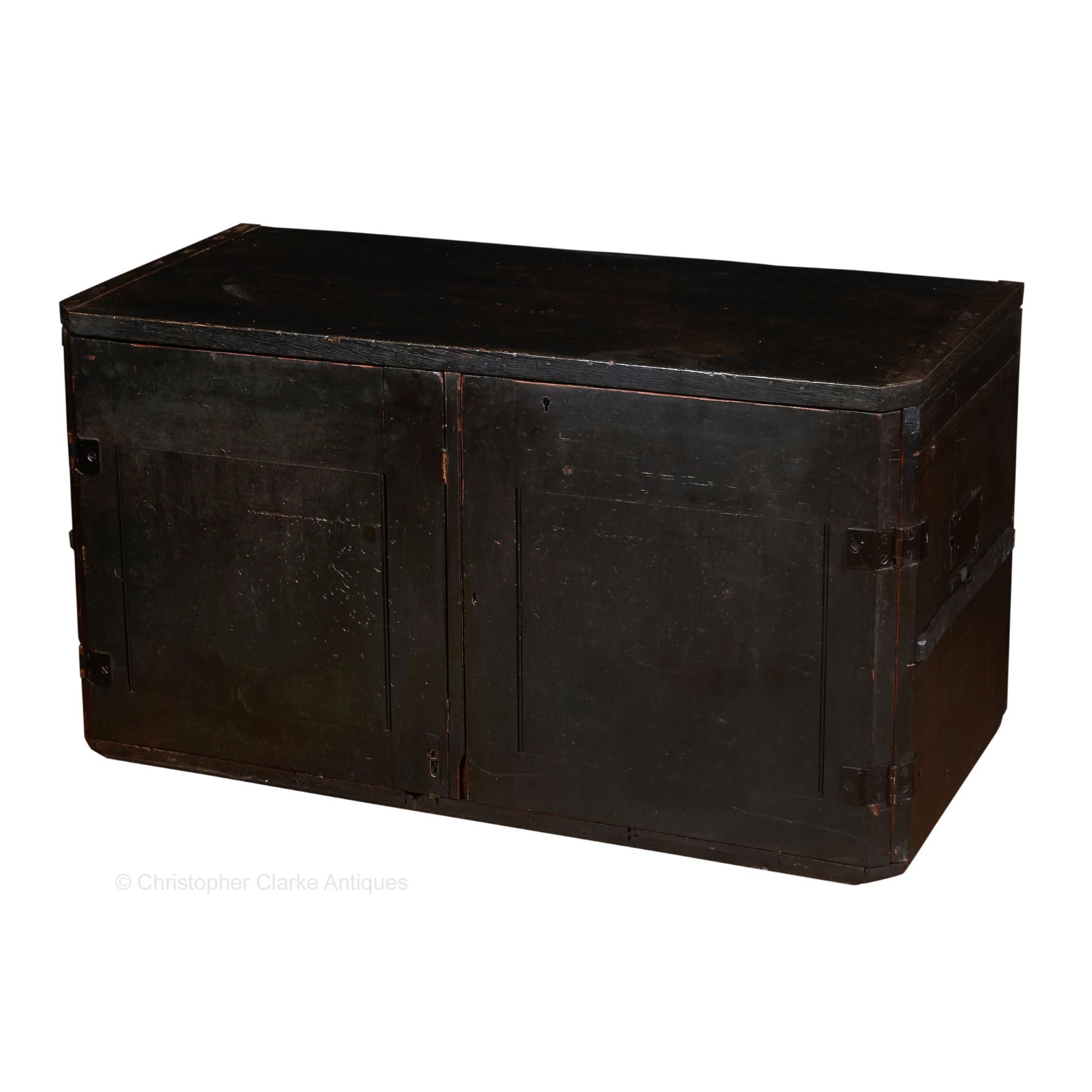
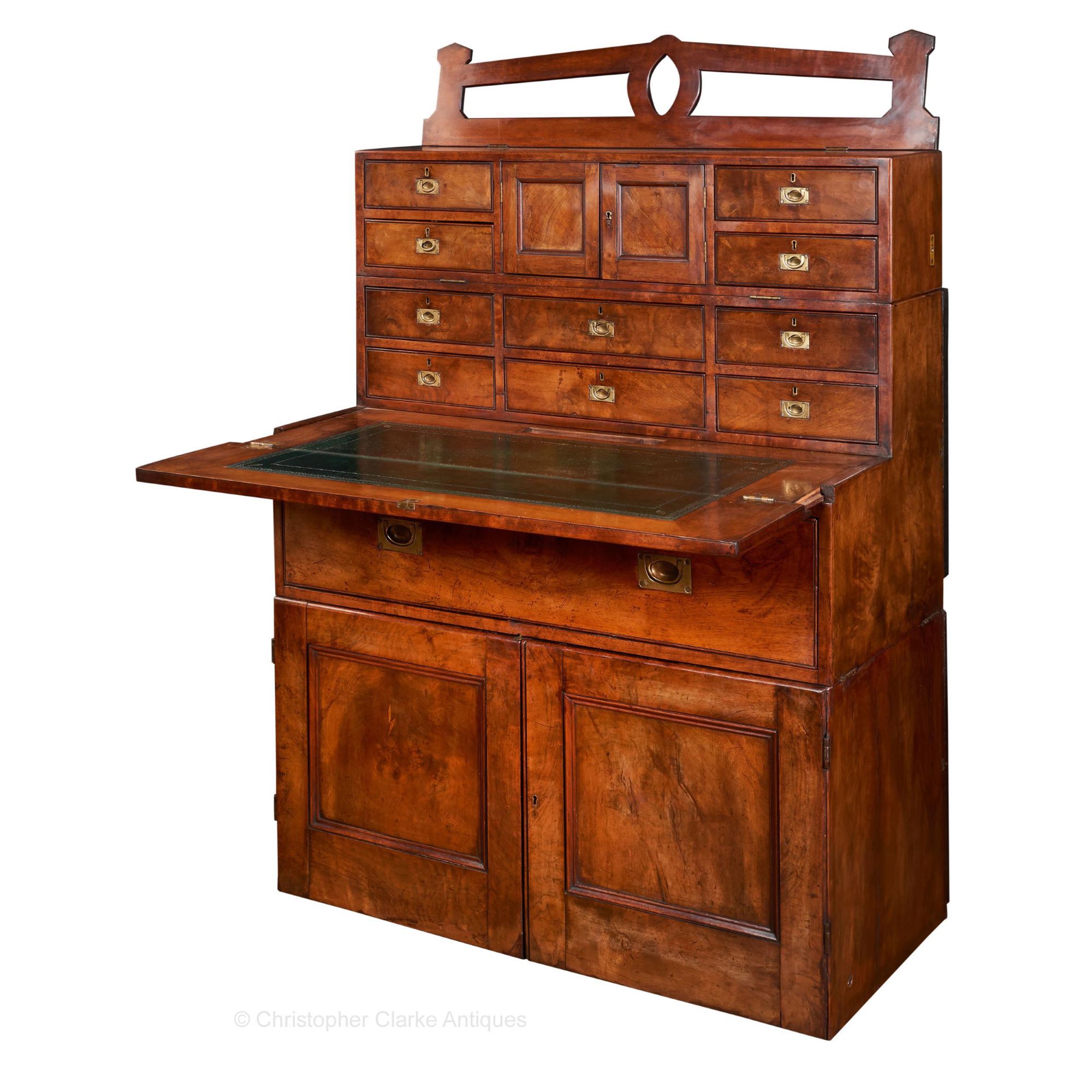
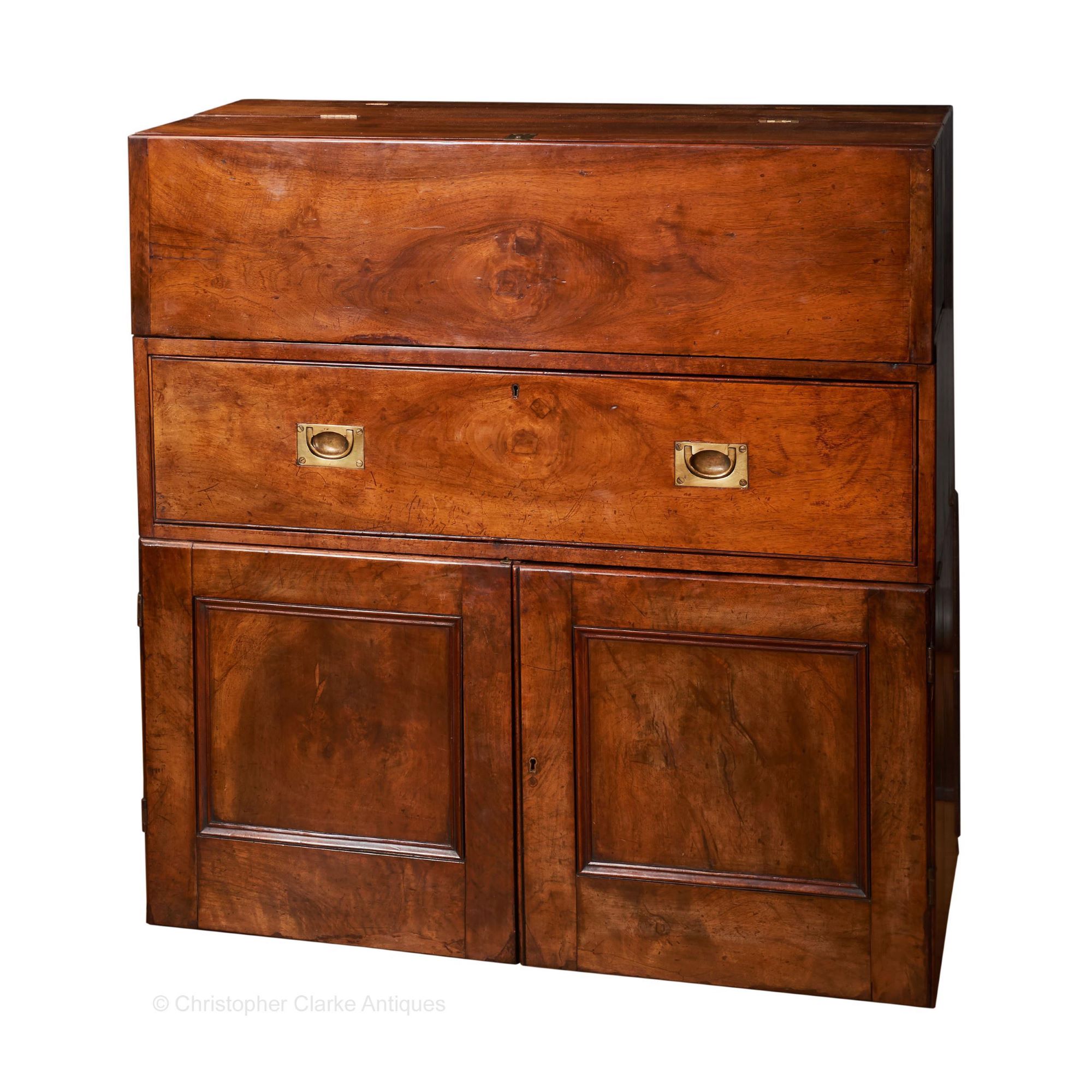
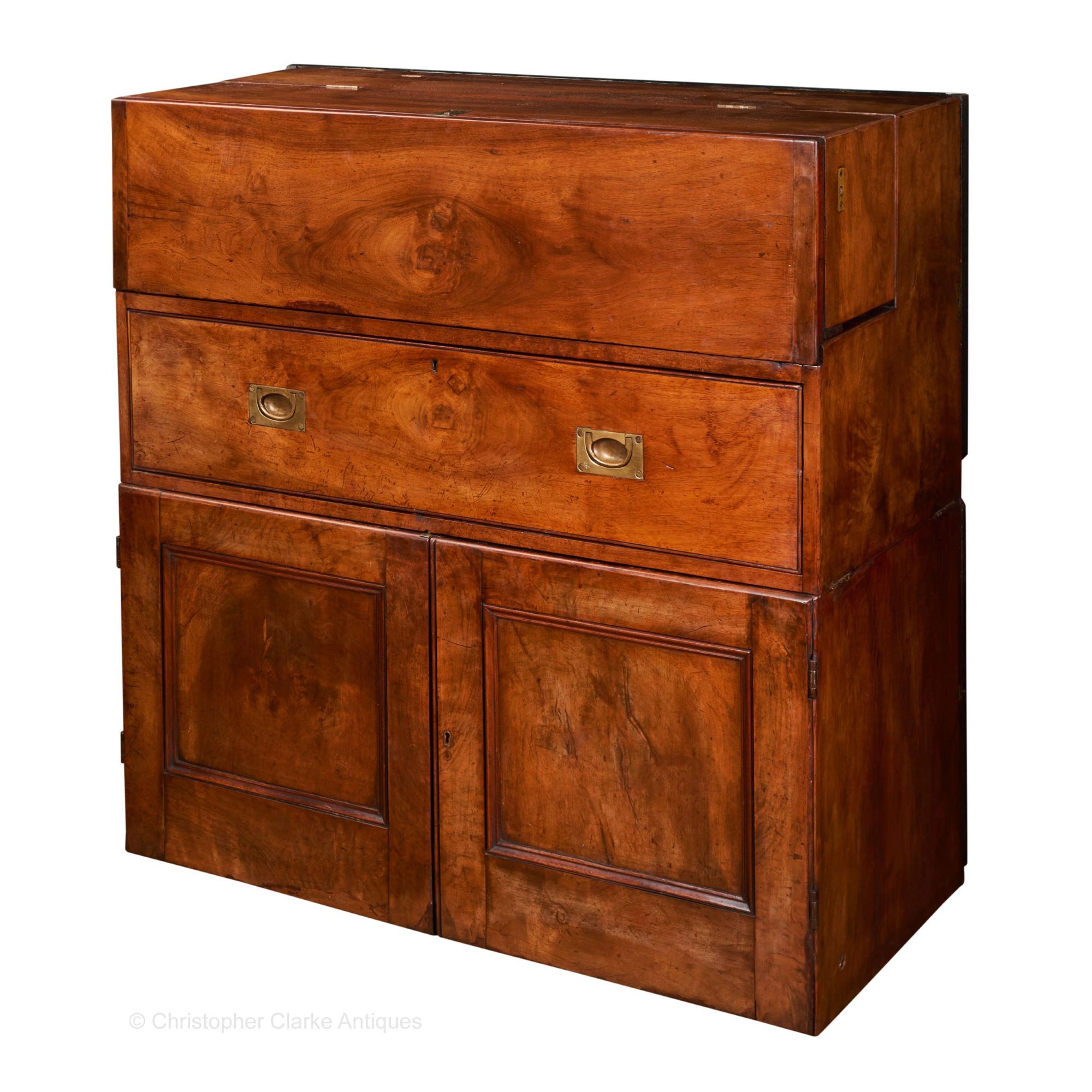
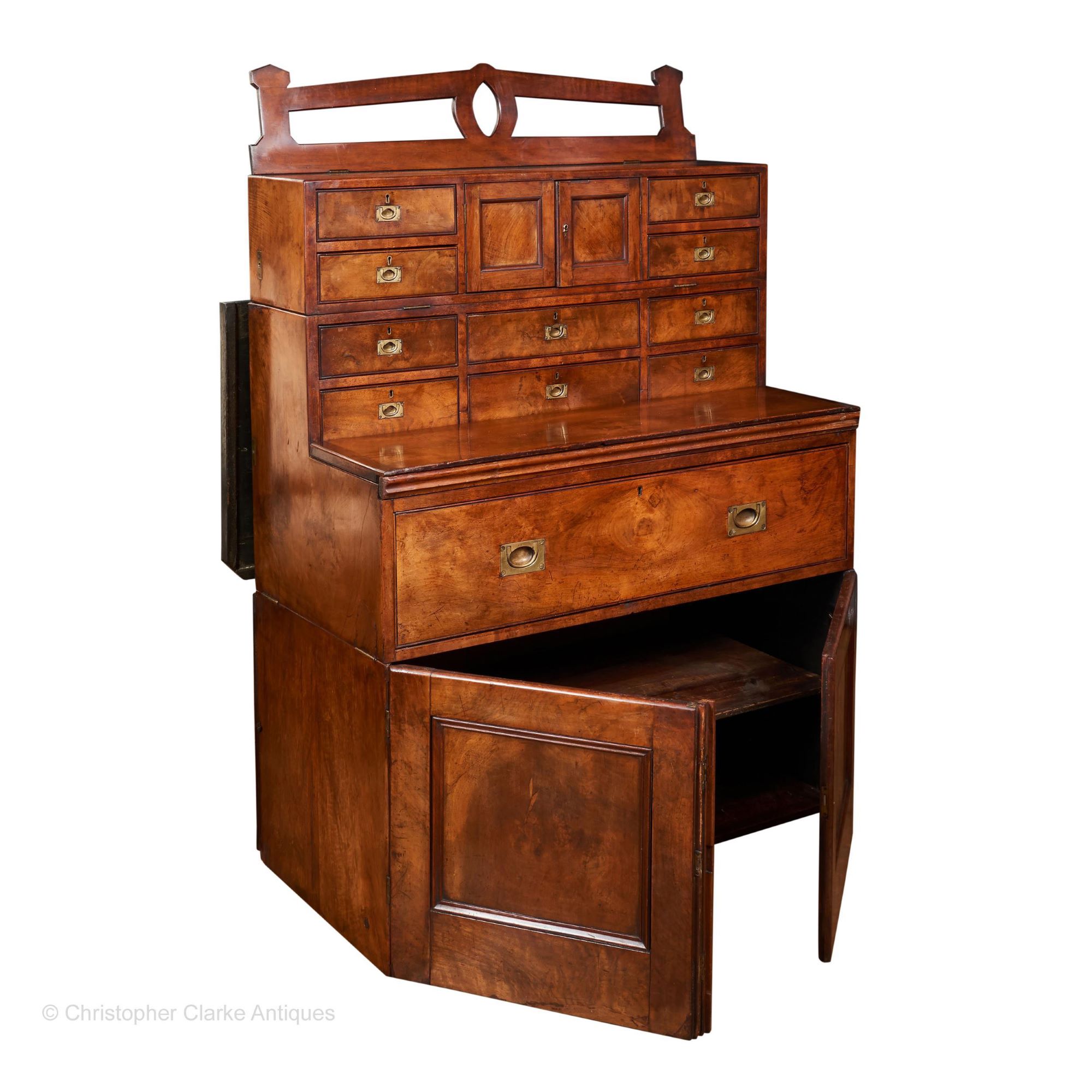
An extraordinary walnut veneered Packing Case Secretaire Campaign Chest.
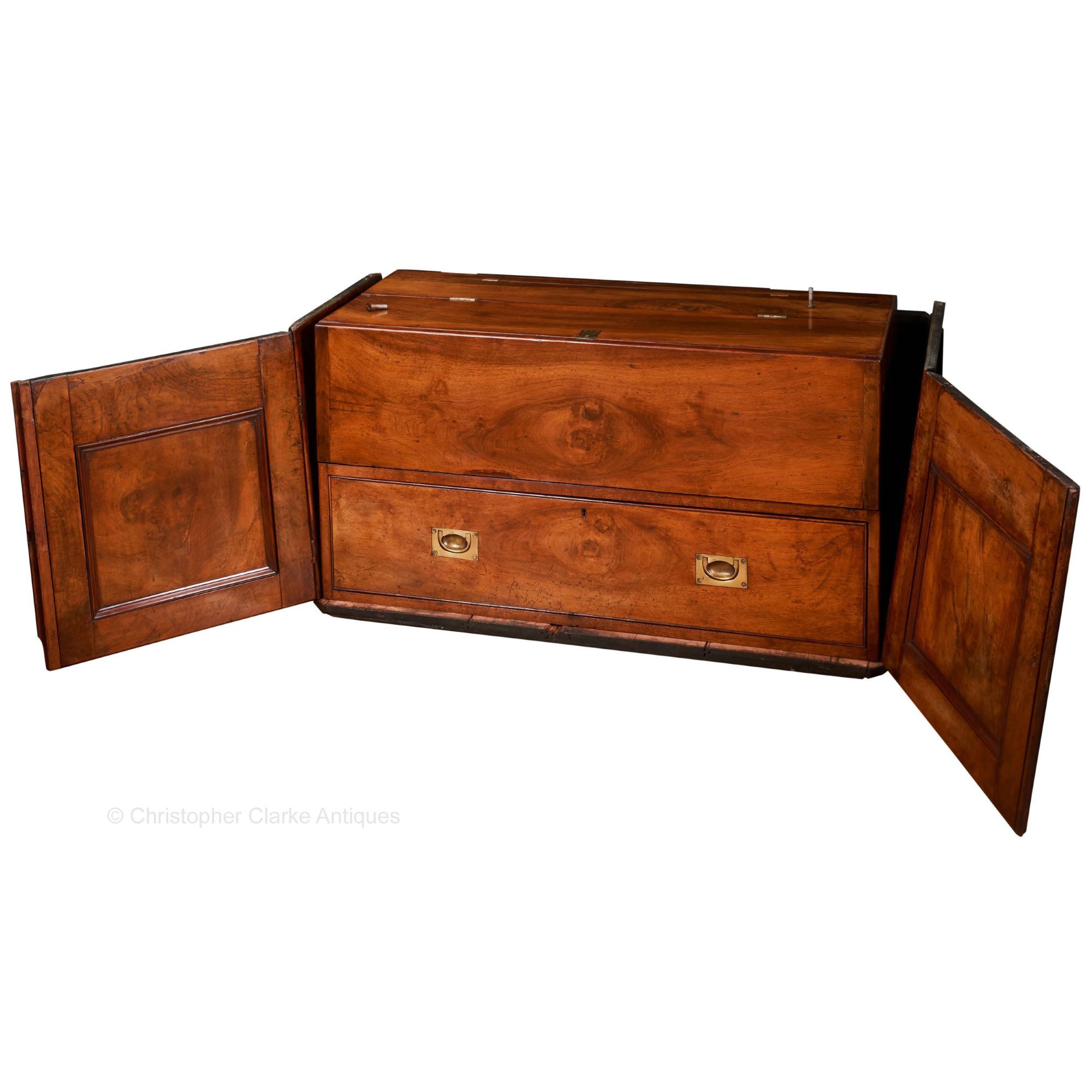
To understand quickly how this low packing case turns into a military chest, it is best to watch the video to the left. Essentially, the outer packing case is made of boards that are hinged to the main body of the chest or each other so that they can turn into the cupboard section. A much fuller description of how this is done is below.
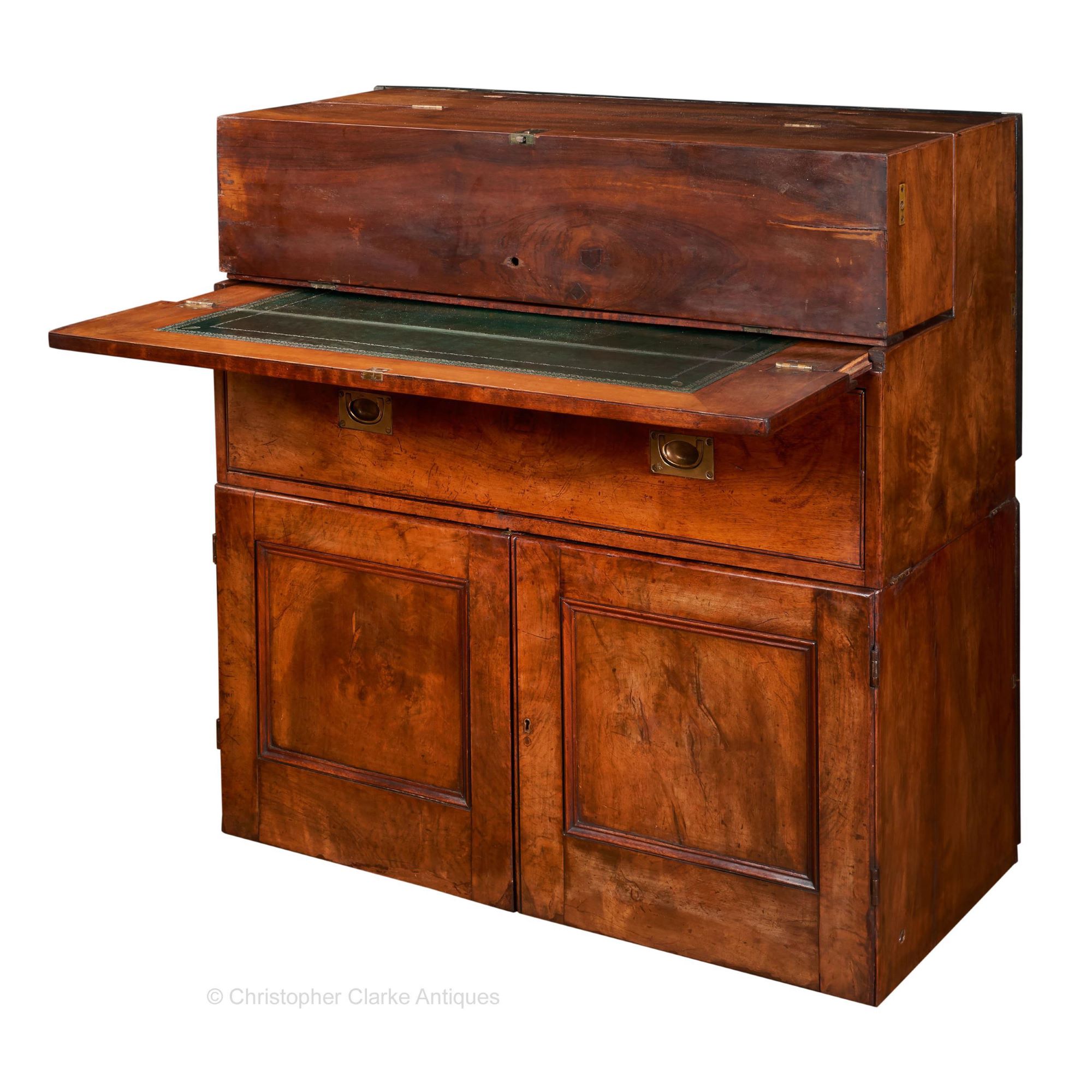
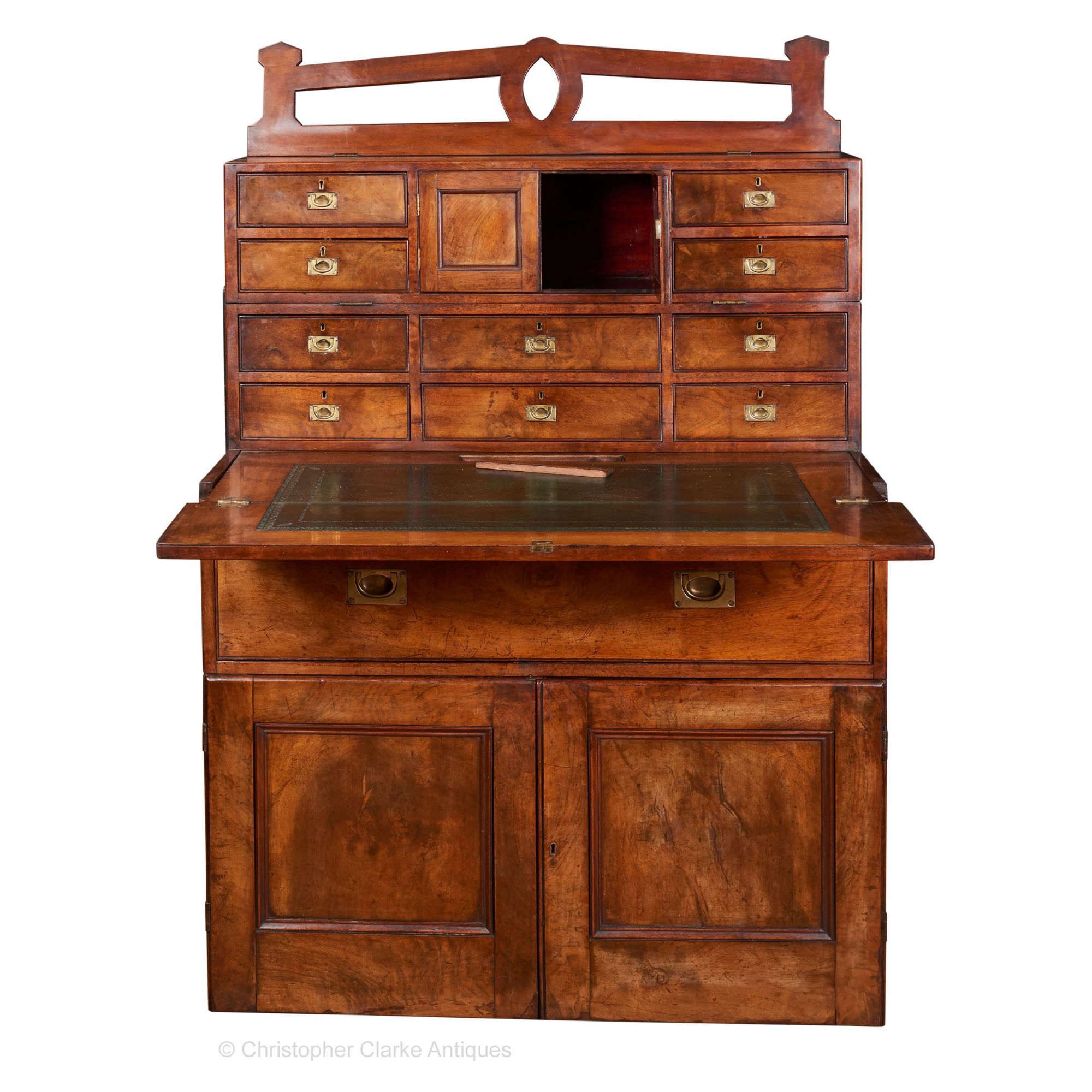
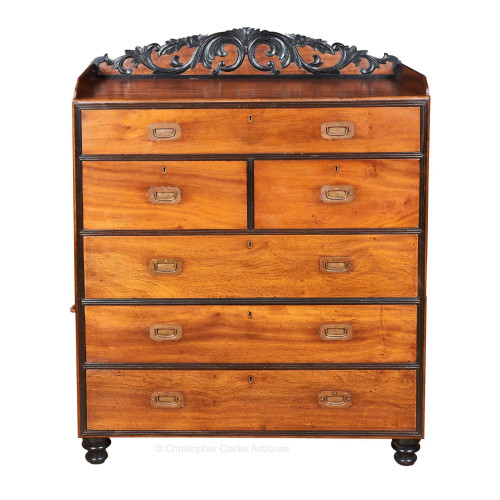
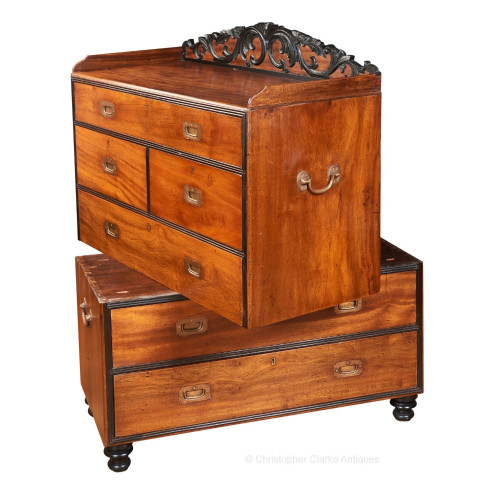
The chest has a hinged board that pulls out to become a writing area with a replaced green leather skiver. To the back of it is a low, tip up pen tray with a well below and a compartment to put an inkwell. The top half of the chest has ten short drawers with a small cupboard. Below the desk board is a single long drawer. The top of the chest is finished with a hinged cresting rail that lifts up.
The chest can be used with the desk both folded or unfolded. If folded, the unsightly gap below the two halves of the desk is fitted with a moulded bar that runs the width of the chest. Aside from the conception of this incredible design, the construction and detail is also worth noting. As there will naturally be a size difference to overcome with the packing boards being larger than the main body, hinged bars are used to adjust the size when converting to the chest. Chamfered edges are used to allow boards to fold at right angles against each other. Bolts are used to both secure the packing boards in place during travel and to fix the built piece of furniture. The small cupboard doors are panelled. It is not unusual for campaign chests to have an incised line cut to their edges to give a cockbeading; the drawers on this chest also have their edges rounded off to further lift the cockbeading. The workshop has gone the extra distance to make a stand out piece of furniture.
The chest was either made in England or an English workshop in a country such as Malta. It is such an unusual campaign chest, we have little to compare it to. The construction of the drawers point to an English hand and this is backed up by hinges by both Kenrick and John Sadler and a Secure Patent lock stamped VR with a crown being used. Either very few of this design were made or they didn't survive, as we have never seen another. The engineering of the design of this chest, that allows a secretaire with superstructure to all be packed within it, must have taken many hours at the drawing board and it would be surprising if only one was made. There are no features to the chest that we can tie to a specific maker and equally we do not know the owner. We have replaced the removable top board which was missing and, if owned by a soldier, its likely his name and regiment would have been painted on it.
This is an exceptional chest of a design we have never seen before and we would be surprised if we ever seen another. Circa 1880.
The packed size is Height 22 1/2 inches (57cm), W 41 1/4 inches (105cm) and Depth 20 inches (51cm).
Detailed Description of the Setup
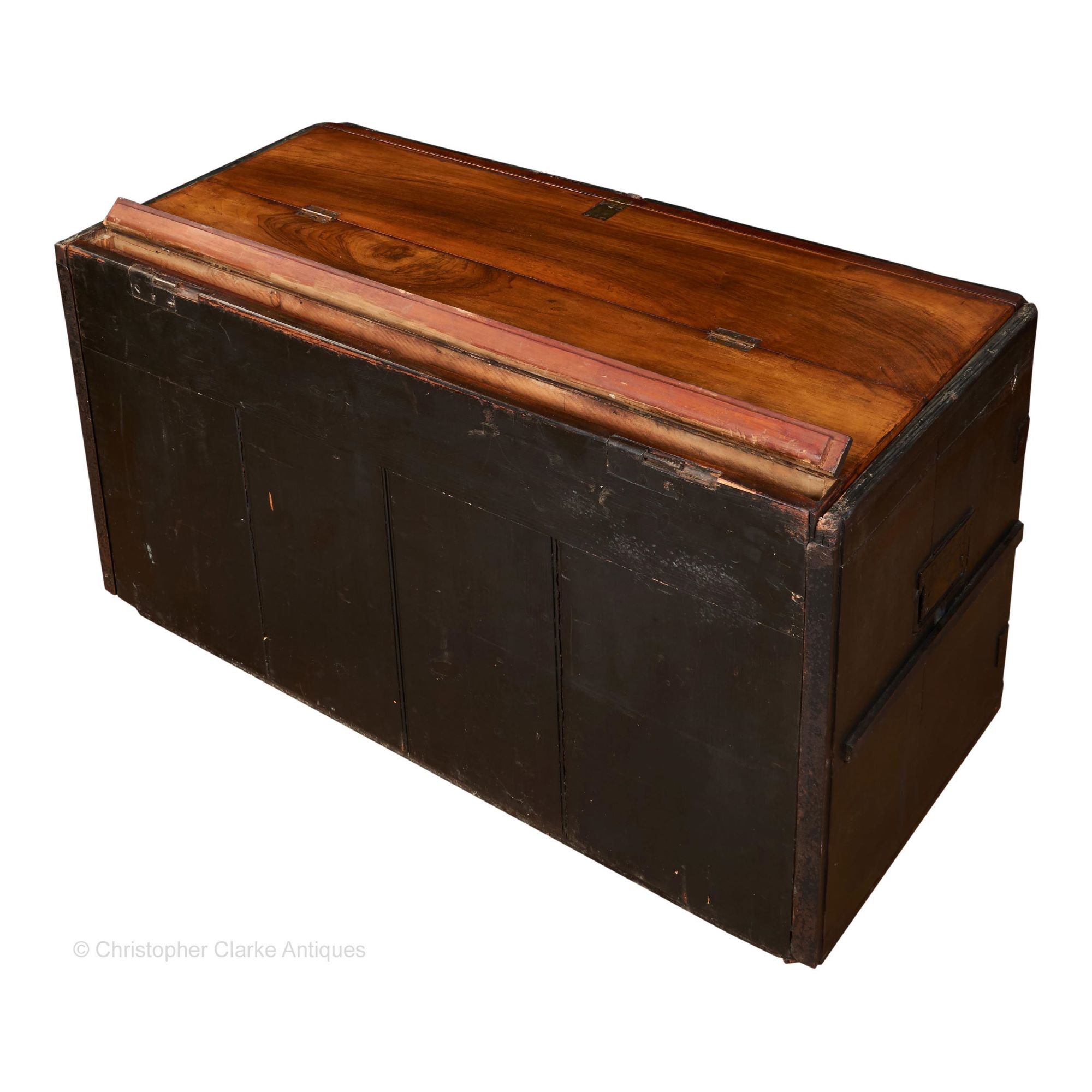
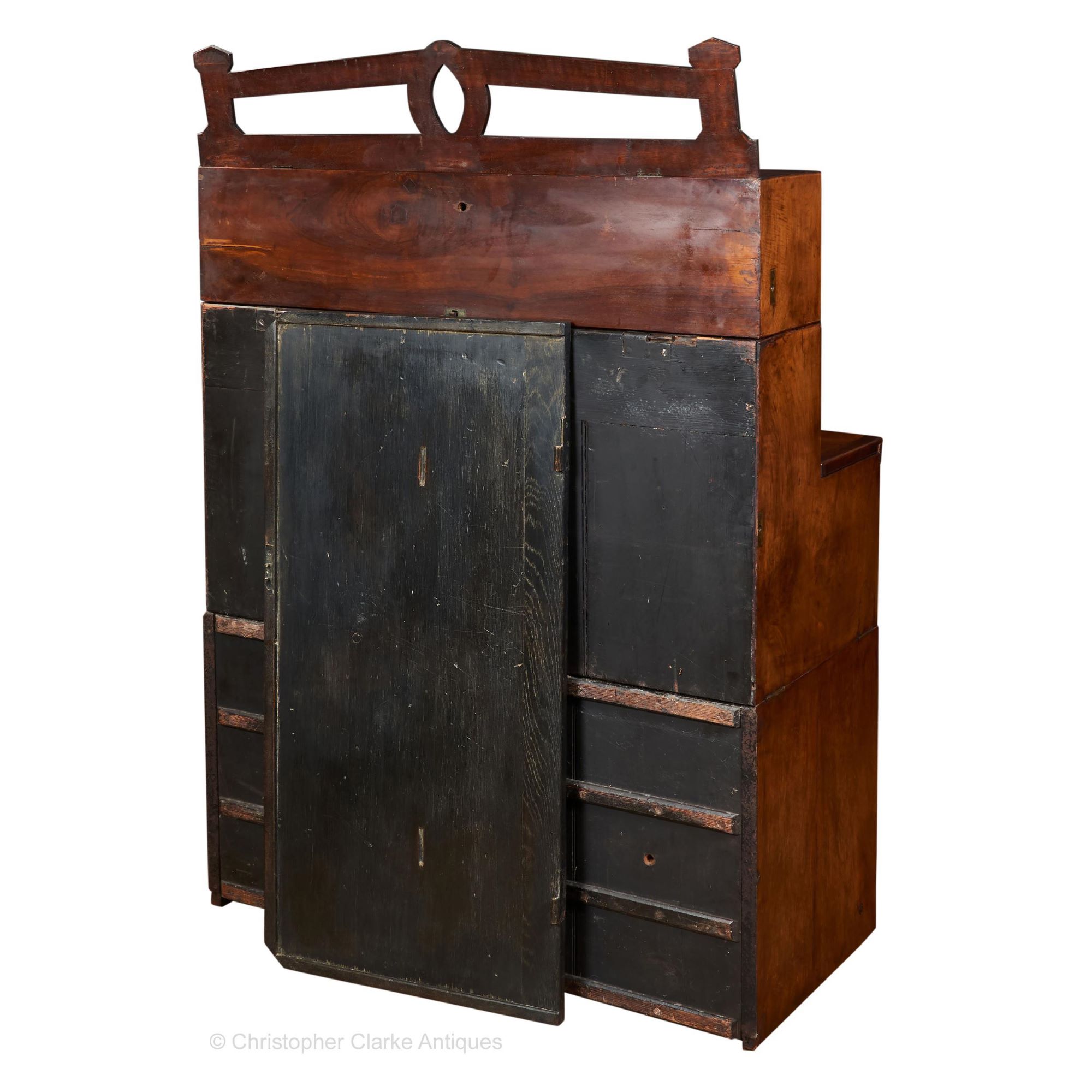
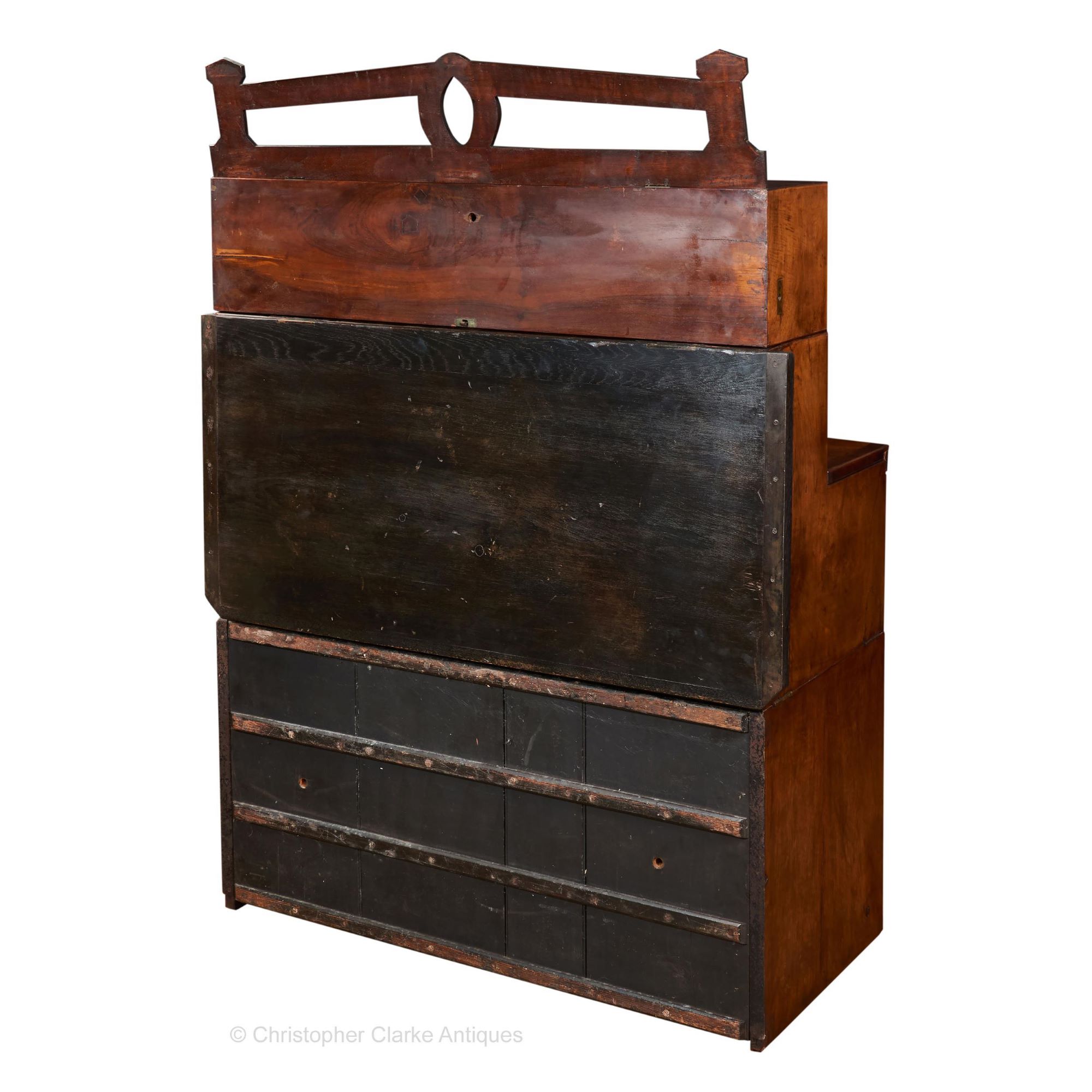
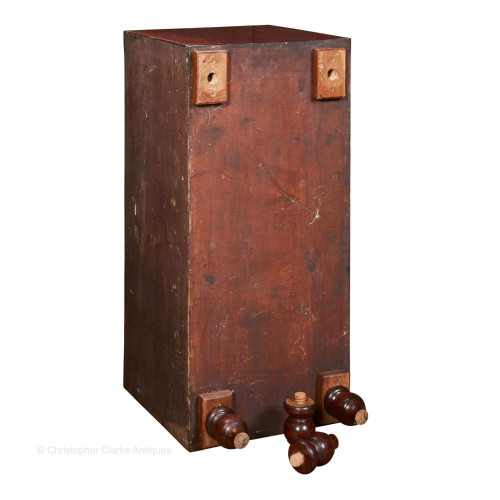
To turn the black painted pine packing case into a walnut secretaire with cupboard below and banks of drawers above, the replaced cover board must first be removed. To do this, it is unlocked to the front, lifted up and then moved two inches to one side so that the two part split hinges to the back separate from each over. To the back of the chest is a narrow compartment that stores the cupboard base board and shelf; these are removed. The packing case then needs to be tipped on to its back and the two bolts holding the bottom of the packing case, with its 4 side to side sledge feet, removed. This board will then drop on its hinges at a right angle to the case. Each end of the board has a hinged bar which are then folded on top of the back board. This is because the length needed as a back for the cupboard is less than that needed when used as the base of the packing case.
Two bolts then need to be unscrewed from each side board to allow them to fold out on their hinges to form the sides of the cupboard. As the cupboard doors are hinged to the sides, they also move. The sides and the doors have chamfered edges where they meet and are hinged so that they can fold at a right angle to each other. The base board, which was first removed from the back with the shelf can now be fixed to make the bottom of the cupboard. The edges of the board are fitted with overhanging steel runners that slide into grooves to the cupboard's sides. Bolts are also used to fix the base board to the sides. The cupboard doors next need to be locked and the chest tipped to stand upright. The cupboard is then opened to fit the shelf which is an old replacement. It sits on runner bars but originally would have had metal runners that slid into grooves to the sides, like the base board.
To the middle of the top of the chest, to the front, is a brass button sprung catch that releases the front half of the writing surface. As you release it, the vertical board need to be pulled forward a little to give it space to fall on its hinges. The section behind this board is hinged to the back and so will lift up to increase the height of the chest and reveal a bank of drawers with a cupboard to the centre. Hinged to this is also a cresting rail that can now be lifted to stand vertically. If desired the top packing board, which was first removed, can be fixed to the back of the chest back on its split hinge as shown in the last photo.
Dimensions:
Late 19th Century
Walnut veneered on pine
Probably England, certainly an English workshop
Packing Case Campaign Chest
Cover board replaced. Two bolts replaced. Shelf an old replacement. Minor restoration to tidy up.
RELATED ITEMS






, W 41 1/4 inches (105cm) and Depth 20 inches (51cm).Detailed Description of the SetupTo turn the black painted pine packing case into a walnut secretaire with cupboard below and banks of drawers above, the replaced cover board must first be removed. To do this, it is unlocked to the front, lifted up and then moved two inches to one side so that the two part split hinges to the back separate from each over. To the back of the chest is a narrow compartment that stores the cupboard base board and shelf; these are removed. The packing case then needs to be tipped on to its back and the two bolts holding the bottom of the packing case, with its 4 side to side sledge feet, removed. This board will then drop on its hinges at a right angle to the case. Each end of the board has a hinged bar which are then folded on top of the back board. This is because the length needed as a back for the cupboard is less than that needed when used as the base of the packing case. Two bolts then need to be unscrewed from each side board to allow them to fold out on their hinges to form the sides of the cupboard. As the cupboard doors are hinged to the sides, they also move. The sides and the doors have chamfered edges where they meet and are hinged so that they can fold at a right angle to each other. The base board, which was first removed from the back with the shelf can now be fixed to make the bottom of the cupboard. The edges of the board are fitted with overhanging steel runners that slide into grooves to the cupboard's sides. Bolts are also used to fix the base board to the sides. The cupboard doors next need to be locked and the chest tipped to stand upright. The cupboard is then opened to fit the shelf which is an old replacement. It sits on runner bars but originally would have had metal runners that slid into grooves to the sides, like the base board.To the middle of the top of the chest, to the front, is a brass button sprung catch that releases the front half of the writing surface. As you release it, the vertical board need to be pulled forward a little to give it space to fall on its hinges. The section behind this board is hinged to the back and so will lift up to increase the height of the chest and reveal a bank of drawers with a cupboard to the centre. Hinged to this is also a cresting rail that can now be lifted to stand vertically. If desired the top packing board, which was first removed, can be fixed to the back of the chest back on its split hinge as shown in the last photo.)